


Dzifa eats less than her friends, walks most evenings, and still the weight settles around her middle. Her periods come every two or three months. She has started to notice dark, velvety skin on the back of her neck, which no amount of scrubbing will shift. “I’m doing everything right,” she says. “Why isn’t it working?”
For many women like Dzifa, the missing piece is a hormone called insulin. Understanding it explains why weight around the middle, PCOS/PMOS and blood sugar so often go together.
What insulin does
When you eat, your blood sugar rises. Insulin, made by the pancreas, moves that sugar out of the blood and into your cells to be used for energy.
In insulin resistance, the cells stop responding properly to insulin. The pancreas makes more and more insulin to keep blood sugar normal. For a while it works, but high insulin levels cause problems of their own.
The cycle that keeps going
- High insulin tells the body to store fat, especially around the tummy.
- Fat around the tummy releases substances that make insulin resistance worse.
- High insulin also tells the ovaries to make more male hormones (androgens).
- Extra male hormones upset ovulation, causing irregular periods, acne and extra hair: the signs of PCOS/PMOS.
- Over time the pancreas gets tired, blood sugar rises, and type 2 diabetes can develop.
Most women with PCOS/PMOS have some degree of insulin resistance, including women who are not overweight. This is why weight can feel so hard to shift, and why it is not about willpower.
Signs of insulin resistance
- Weight that collects around your waist
- Dark, velvety patches of skin on the neck, armpits or groin
- Small skin tags, often on the neck or armpits
- Strong cravings for sugar or starchy food
- Feeling sleepy or foggy after meals
- Irregular periods
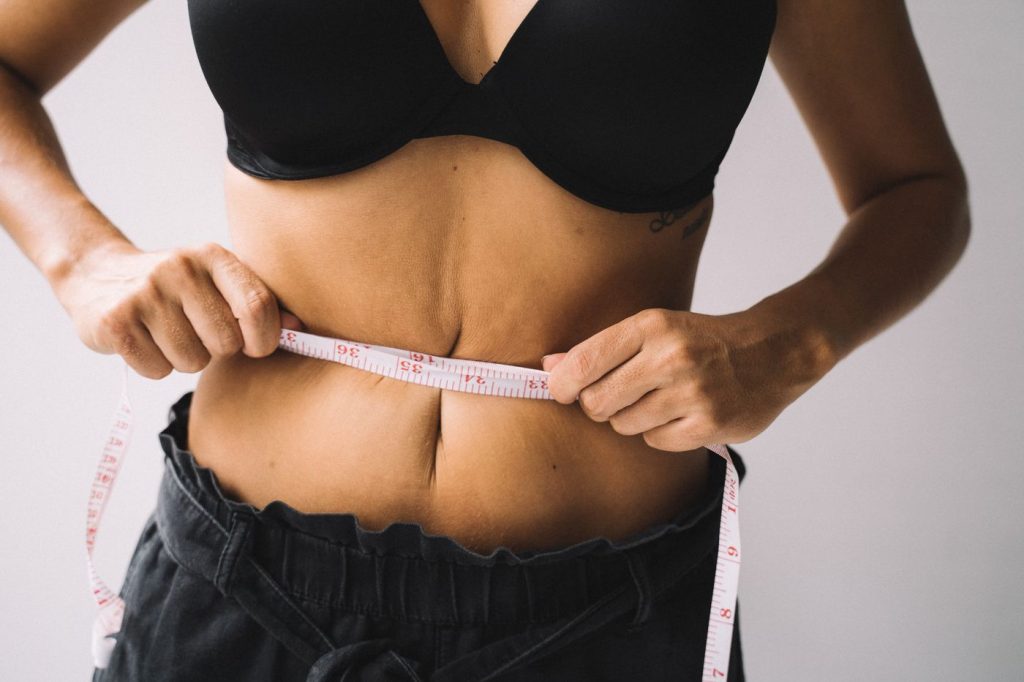
Why your waist size matters
Your waist measurement can tell you more about your risk than your weight alone. The bigger the waist, the greater the chance of diabetes and heart disease. For a woman, a waist of 80 to 87 cm (31.5 to 34 inches) means the risk is starting to rise, and 88 cm (34.5 inches) or more means the risk is high. For a man, the same two levels start at 94 cm (37 inches) and 102 cm (40 inches). Measure around your bare tummy, halfway between your lowest rib and the top of your hip bone. Our free healthy weight check does the sums for you.
The good news: small changes make a real difference
For women with PCOS/PMOS who are overweight, losing just 5 to 10% of body weight (for example, 5 to 10 kg for someone who weighs 100 kg) can bring back regular periods, improve ovulation and lower blood sugar. You do not need to reach a “perfect” weight to feel the benefits.
What helps
Food
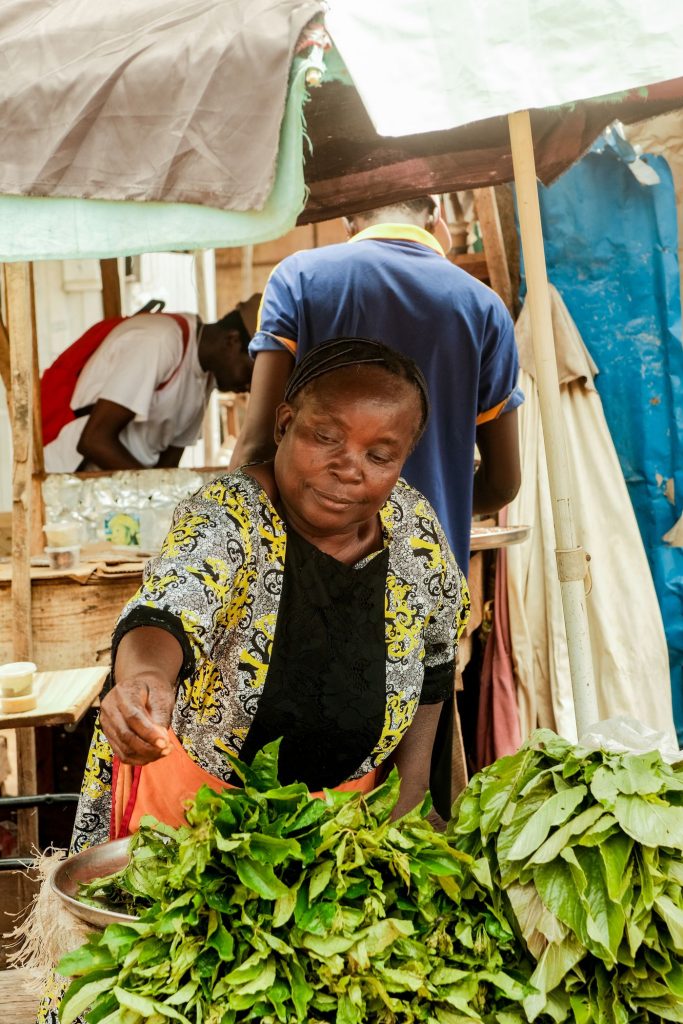
- Fill half your plate with vegetables such as kontomire, garden eggs, okro, cabbage or salad.
- Keep fufu, banku, kenkey, gari and white rice to a smaller portion, about a quarter of the plate. Brown rice, oats and beans release sugar more slowly.
- Include protein at every meal: fish, eggs, beans, chicken or groundnuts.
- Cut down on sugary drinks, including soft drinks, malt drinks and sweetened juices. Eat fruit whole rather than as juice.
- Avoid eating a large meal late at night.
Movement
- Aim for 150 minutes of activity a week, such as a brisk 30-minute walk five days a week.
- Add muscle-strengthening exercise twice a week. Muscle uses sugar, which helps insulin work better.
- A 10-minute walk after your main meal can help lower the rise in blood sugar.
Sleep and stress
Poor sleep and ongoing stress both make insulin resistance worse. Our free sleep check is a good place to start.
Medicines and supplements
Your prescriber may suggest metformin, a medicine that helps the body respond better to insulin. Some women also use supplements:
- Berberine. A plant compound studied for its effect on blood sugar and insulin. Some studies, including in women with PCOS/PMOS, found it lowered blood sugar and improved insulin resistance. It can cause stomach upset, constipation or diarrhoea, and it interacts with several medicines, including diabetes medicines. It is not suitable in pregnancy or breastfeeding. See Draxer Berberine HCl, and speak to a pharmacist before you start.
- GynoEssence. Our hormones and periods range includes GynoEssence, our women’s hormone support supplement, which many women with PCOS/PMOS use. Ask us whether it suits you.
When to see a prescriber
Ask for a blood sugar test (fasting glucose or HbA1c) if you have signs of insulin resistance, PCOS/PMOS, a large waist, or type 2 diabetes in the family. See a prescriber promptly if you are very thirsty, weeing a lot, losing weight without trying, or have blurred vision.
What you can do today
- Check your BMI and waist with our healthy weight check.
- Take our two-minute PCOS/PMOS check.
- Chat with a Draxer pharmacist on WhatsApp or book a free consultation to make a plan that fits your life.
Questions about this topic?
Talk to a Draxer pharmacist on WhatsApp. Advice is free.
This article is for general information. It does not replace advice from your prescriber or pharmacist about your own health.
For health professionals: our clinical guide to PCOS/PMOS, with diagnosis, screening and treatment, and calculators for insulin resistance. Read the PCOS/PMOS guide →
