

Family planning is one of the most meaningful ways a woman can protect her health, strengthen
her marriage and give her children the best start in life. Yet among married women in Ghana,
conversations about contraception often sit quietly behind closed doors wrapped in fear,
confusion, and myths that have survived for generations.
But there’s something important we must remember: family planning is not a foreign idea. Our
mothers and grandmothers practiced birth spacing long before modern clinics existed they used prolonged breastfeeding, cultural abstinence, herbal timing, and community advice to keep
families healthy and stable. Modern contraceptives are simply newer tools supporting an old,
very Ghanaian wisdom.
Let’s explore what every married couple in Ghana should know how contraceptives are used
today, what worries women the most, the myths that cause fear, and how both science and family
planning services can do better.
- Contraceptive Use Among Married Women Is Growing but Still Not Enough
Across Ghana, awareness of family planning is high, but actual use among married women is
still lower than expected. Many women want to space their children or avoid pregnancy for
health, financial, or emotional reasons, yet hesitate to use modern methods.
Some rely on traditional methods. Some stop using contraception after the first side
effects. Others struggle because of marital pressure, family expectations, or fear of being judged.
This gap shows that married women are not unwilling they simply need clearer information,
better support, and more confidence in the options available.
- Married Women Carry Deep Fears Often Quietly
Fear is one of the biggest barriers to contraceptive use, even for women who want to plan their
pregnancies
Many married women worry about:- Becoming infertile after using contraception
- Bleeding changes or hormonal effects
- Being misunderstood by their husbands
- Being judged by in-laws or the community
- The belief that “modern family planning spoils the womb”
These fears are powerful because they come from real stories and lived experiences so when a woman hesitates, it’s not because she doesn’t care it’s because she cares deeply about her body, her marriage, and her future.
- The Myths Are Loud But They Are Not True.
Women often hear frightening things about family planning, but most of these are myths.
Myth: “The implant moves to your heart or brain.”
Truth: It stays exactly where it’s placed.
Myth: “Family planning makes you permanently barren.”
Truth: Fertility returns naturally when you stop most methods.
Myth: “Contraception causes cancer, fibroids, or deformities.”
Truth: Modern contraceptives do not cause any of these conditions.
Myth: “Spacing children is not African.”
Truth: Our parents practiced spacing long before hospitals existed.
When couples understand the truth, decision-making becomes calmer, kinder, and more
cooperative.
- The Challenges Married Women Face and How Science Can Make Family Planning
Even Better.
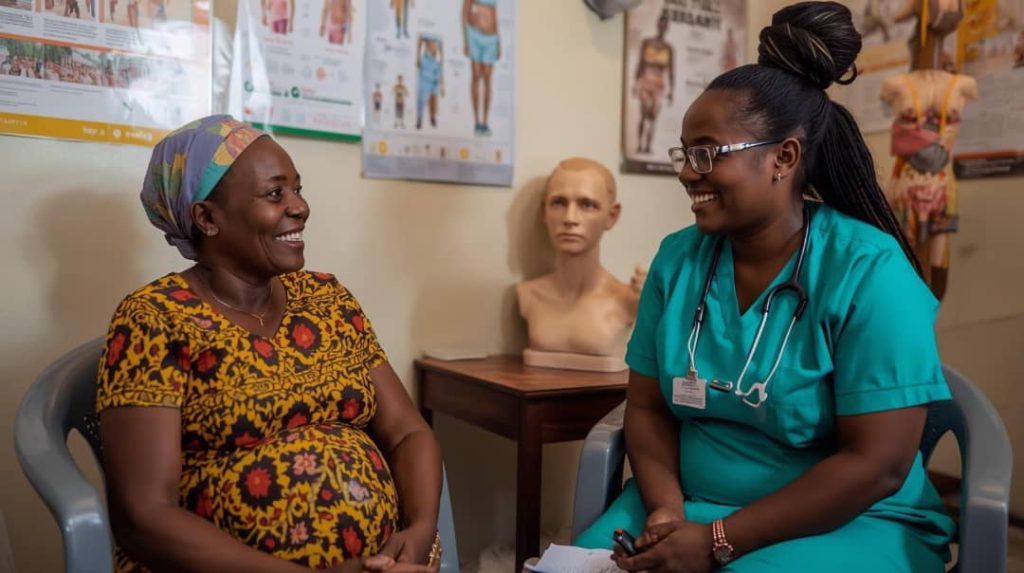
To truly support married women, we must be honest: no contraceptive method is perfect, and
many women stop using methods because of discomfort, inconvenience, or fear of side effects.
Below are the most common ‘cons’ married women face and the solutions scientists and health
systems are working on to improve them.
a. Hormonal Side Effects
Irregular bleeding, breast tenderness, mood changes, headaches, or weight fluctuations.
What scientists can do:
- Develop gentler hormones
- Create low-dose or ultra-low-dose formulations
- Expand non-hormonal options for women sensitive to hormones
b. Inconvenience or Difficult Routine
Pills must be taken daily; injectables require clinic visits; implants need trained providers.
What scientists can do:
- Create longer-lasting injections
- Develop once-a-month or once-every-few-months pills
- Explore self-administered injectables
c. Delay in Return to Fertility (Especially Injectables)
Some women experience a few months’ delay after stopping certain methods.
What scientists can do:
- Design formulations that clear from the body faster
- Personalize recommendations based on a woman’s unique biology
d. Partner Resistance
Many women cannot use certain methods because their husbands distrust them,or misunderstand
modern family planning. What experts can do:
- Expand research into male contraceptives
- Create reversible male pills and injections
- Promote couple-based counselling across Ghana
e. Limited Method Choices in Some Facilities
CHPS compounds or small clinics may not have implants, IUDs, or emergency contraception.
What health systems can do:
- Strengthening supply chains
- Train more nurses and midwives in insertion and removal
- Expand community-based distribution
f. Fear Due to Poor Counselling
When women don’t know what to expect, small changes feel like danger.
What providers can do:
- Spend more time explaining side effects
- Use simple language, not medical jargon
- Encourage follow-ups rather than discontinuation

By acknowledging these challenges openly, we empower married women not frighten them. And
by improving the science and service delivery behind contraception, we move closer to a future
where every woman feels safe making decisions about her body.
Final Thoughts
For married women in Ghana, family planning is not an act of rebellion.
It is an act of love, responsibility, and protection for themselves, their husbands, and their
children.
It follows the same wisdom our elders practiced, now supported by modern tools.
What women need today is:
- Clear information
- Compassionate care
- Supportive husbands
- Respectful health workers
- Safer, improved contraceptive options
When science, culture, and healthcare come together, family planning becomes not a burden but a blessing that strengthens homes across Ghana.