

Abena’s friend is convinced by it. “Vitex fixed my periods,” she says. Abena’s sister tried it for a month and says it did nothing. Online, some posts call it a miracle for fertility, and others say it is useless.
So which is it? As pharmacists, we would rather give you the full picture, so you can decide whether Vitex is worth trying for you.
What is Vitex?
Vitex (Vitex agnus-castus), also called chasteberry, is the fruit of a shrub that grows around the Mediterranean. It has been used for women’s health for centuries. Today it is one of the most studied herbal products for the menstrual cycle.
How it works
Vitex does not contain hormones. It works on the pituitary gland in the brain, the gland that sends signals to your ovaries. Its main known effect is to lower a hormone called prolactin when it is slightly high. High prolactin can upset ovulation, cause breast tenderness and lead to a short second half of the cycle.
By calming prolactin, Vitex may help the second half of the cycle (after ovulation) work better and help the balance between oestrogen and progesterone.
What the evidence supports
- PMS (premenstrual syndrome). These are the mood swings, bloating, headaches and sore breasts some women get in the days before a period. This is where the evidence is strongest. Several good-quality studies found Vitex reduced irritability, mood swings, bloating, headaches and breast tenderness before periods.
- Cyclical breast pain. Breasts that become sore and swollen in the days before a period often improve.
- Mildly raised prolactin. Vitex can bring slightly high prolactin down.
Where the evidence is weaker
- Irregular periods. Some women find their cycles become more regular, especially when prolactin is part of the problem. The research here is smaller and less certain.
- Fertility. A few small studies suggest Vitex may help some women with short or irregular cycles, but it is not a fertility treatment on its own. If you have been trying for a baby for a year (or six months if you are 35 or over), see a prescriber.
- PCOS/PMOS. Vitex does not treat PCOS/PMOS itself. Women with PCOS/PMOS sometimes use it alongside other approaches, but it is not a first choice.

Give it time
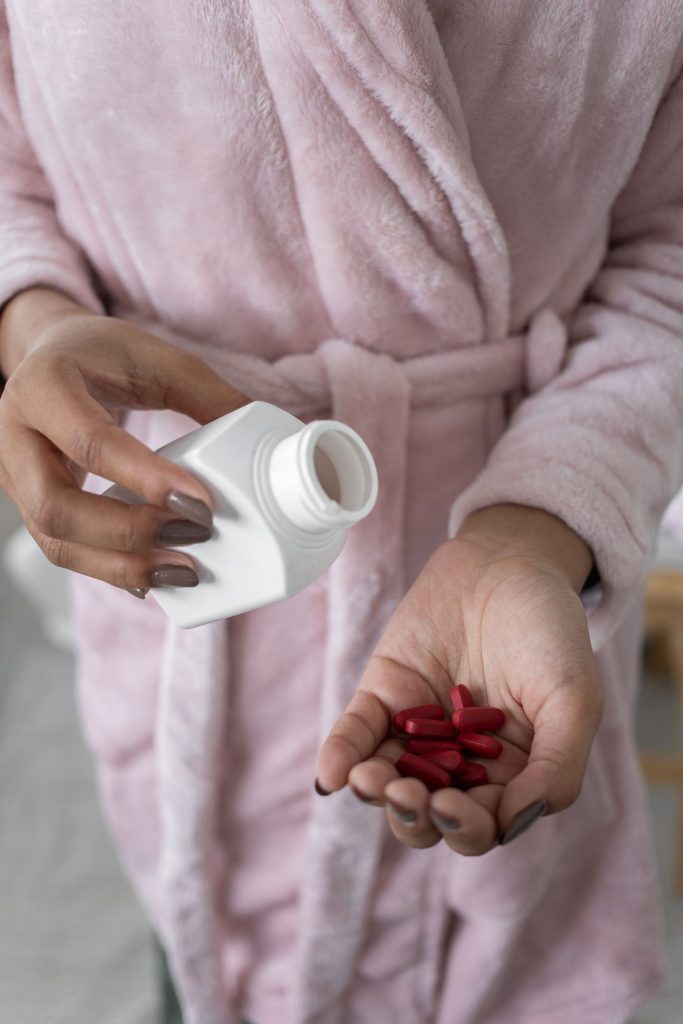
Vitex works slowly. Most studies looked at results after three months of daily use. One month is usually too soon to judge, which may explain why Abena’s sister felt nothing. Take it exactly as the pack says. For Draxer Vitex, that is 2 capsules twice a day, about 12 hours apart, for example at breakfast and in the evening.
Who should not take Vitex
Do not take Vitex, or speak to a prescriber first, if you:
- are pregnant or breastfeeding
- use hormonal contraception such as the pill, implant or injection
- are having fertility treatment such as IVF, or taking fertility medicines
- take medicines that act on dopamine, such as some medicines for mental health or Parkinson’s disease
- have had, or are being treated for, a hormone-sensitive condition such as breast cancer
Possible side effects
Most women take Vitex without trouble. Some notice mild stomach upset, headache, tiredness, acne, an itchy rash or spotting between periods. These usually settle, but stop and talk to your pharmacist if they bother you.
Is Vitex right for you?
Vitex is a sensible option to discuss if your main problem is mood swings, bloating or sore breasts before your period, or a cycle that may be affected by prolactin. If your periods are very irregular, missing, or you have signs of PCOS/PMOS, it is worth getting checked first so you know what you are treating.
What you can do today
- Check your pattern. Use our free cycle tracker for two or three months. It will help you and your pharmacist see what is going on.
- Rule out PCOS/PMOS. Take our two-minute PCOS/PMOS check.
- Learn more about Draxer’s Vitex. See our Vitex page, and ask a pharmacist whether it suits you before you start.
Questions about this topic?
Talk to a Draxer pharmacist on WhatsApp. Advice is free.
This article is for general information. It does not replace advice from your prescriber or pharmacist about your own health.
For health professionals: the placebo-controlled trial of Vitex for PMS, summarised for practice. Read the research summary →