
Ama checked the calendar three times. Her period was due last Tuesday, and it still had not come. She bought a pregnancy test on the way home from work, locked herself in the bathroom and waited. One line. Negative. Two days later, still no period, she bought another one. Negative again.
If this sounds like something you have experienced, you are not alone. A late period with a negative test is one of the most common questions we get. The good news is that most of the time there is a simple explanation.
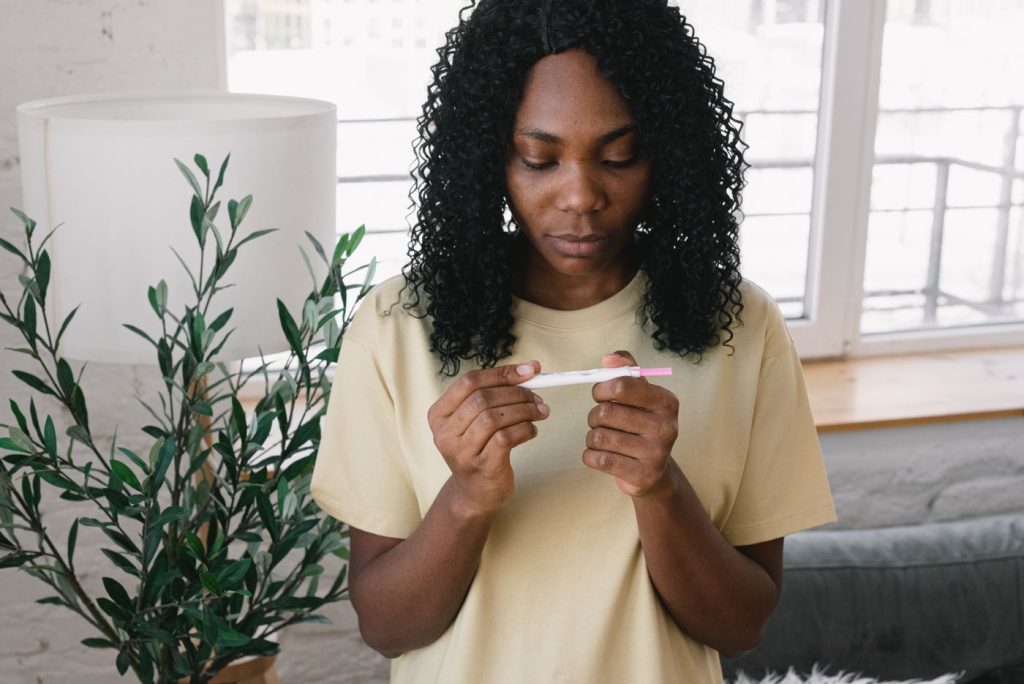
First, could the test be wrong?
A home pregnancy test looks for a hormone called hCG. Your body only starts making it after a fertilised egg settles in the womb, and the level takes a few days to rise. So a test can be negative even when you are pregnant if:
- You tested too early. If you ovulated later than usual this month, your period is not really “late” yet, and neither is the hormone.
- Your urine was too diluted. Drinking lots of water before testing can weaken the result. Use your first wee of the morning.
- You read it too early or too late. Follow the time on the packet exactly.
If there is any chance you could be pregnant, wait three to seven days and test again with first-morning urine.
Common reasons your period is late
If the second test is also negative, these are the usual suspects:
- Late ovulation. Your period comes about 14 days after you ovulate. If stress, illness or travel delayed ovulation by a week, your period will be a week late too.
- Stress. Exams, a new job, money worries or a family problem can all pause ovulation for a cycle.
- A big change in weight or exercise. Losing or gaining weight quickly, or starting very hard training, can upset your hormones.
- Illness. A bad bout of malaria, typhoid or flu around the middle of your cycle can push your period back.
- Hormonal contraception. The pill, the injection and the implant often make periods lighter, irregular or absent. Periods can also take a few months to settle after you stop.
- Breastfeeding. Periods often stay away while you breastfeed, but you can still ovulate and get pregnant.
- PCOS/PMOS. Long or irregular gaps between periods are one of its main signs, often with acne, extra hair or weight gain around the middle.
- Thyroid problems. An underactive or overactive thyroid can make periods irregular.
- Getting closer to menopause. From your early 40s, cycles often become less predictable.
One late period now and then is usually nothing to worry about. A pattern is worth looking into.
When to see a prescriber
Speak to a prescriber if:
- you have missed three periods in a row and you are not pregnant
- your periods are often more than 35 days apart
- you have bleeding between periods or after sex
- you have tummy pain, unusual discharge or a fever
Go to the hospital straight away if you have a positive test followed by strong pain on one side of your tummy, heavy bleeding or feeling faint. These can be signs of a pregnancy outside the womb, which is an emergency.
What you can do today
- Track your cycle. Write down the first day of every period. After two or three months you will see your own pattern. Our free cycle tracker makes this easy.
- Work out when you ovulate. Our free ovulation calculator shows your likely fertile days and when your next period is due.
- Check for signs of PCOS/PMOS. If your periods are often late, take our two-minute PCOS/PMOS check.
Still unsure? Chat with a Draxer pharmacist on WhatsApp or book a free consultation. We are happy to talk it through.
Questions about this topic?
Talk to a Draxer pharmacist on WhatsApp. Advice is free.
This article is for general information. It does not replace advice from your prescriber or pharmacist about your own health.
For health professionals: our clinical guide to PCOS/PMOS, a common cause of late or missed periods. Read the PCOS/PMOS guide →